Wednesday, September 22, 2010


Tuesday, September 21, 2010
FREE AUDIO AND BRAILLE BOOKS
The Library of Congress has a FREE service to lend Braille and audio books to visually and physically impaired people. This program is called the National Library Service for the Blind and Physically Handicapped. (NLS)
Through a national network of cooperating libraries, NLS administers a free library program of Braille and audio materials circulated to eligible borrowers in the United States by postage-free mail.
Who is eligible:
- Blind persons or those with visual impairment which prevents them from reading standard printed material
- Other physically handicapped persons who are unable to read or use standard printed material as a result of physical limitations.
Overview
"A network of regional and subregional libraries provides a free library service to persons who are unable to use standard printed material because of visual or physical disabilities. Library patrons can expect to borrow audio or braille books such as they might find in print at a local public library. Books and magazines in audio form (talking books) and braille are delivered to eligible readers by postage-free mail and are returned in the same manner. Specially designed phonographs and cassette players are also loaned free to persons who borrow talking books from their library."
Saturday, May 22, 2010
Choosing The Right Medical Mobility Equipment
The Renaissance Fair was something Annie looked forward to every year but this year she would have to skip it. There was just too much walking and her medical problems had progressed as expected, limiting her endurance. Maybe it was time for her to accept her limitations and put that aspect of her life behind her, OR maybe not.
I recently had a discussion with a neighbor who is a Physical Therapist. She has a blanket rule that she never recommends handicapped scooters. Her thinking is that a walker with a seat provides the same support and helps keep the user active. I would contend that her approach is a "one size fits all" way of thinking. Coming from a position of a person who actually has a disability, I think this approach limits the opportunities available to physically challenged people. For me, because of fatigue due to multiple sclerosis, I had very limited endurance. My scooter helped me live a more active and independent life. If I paced myself, it was amazing what I could accomplish. The independence that it allowed me did wonders for my self image.
I used a full sized scooter with a lift to get my scooter in and out of my van in one piece. With the lift, I only had to be able to walk to the back of the car and push the lift buttons to remove or insert my ride. Not having these aids would have severely compromised my independence. I was able to do my own grocery shopping, which is something I would never have accomplished if I was required to walk up and down all those aisles. This aid allowed me to take a plane trip alone and brave a five hour solo trip by car. In order to continue exercising my legs, I did not use the scooter in the house. My scooter helped me to expand my world and allowed me to continue activities outside my home. I am not saying don't push yourself to be as active as you can be, but when you have come to a wall, don't automatically discourage aids that will help you overcome obstacles. (Because my needs have changed, I now use a power wheelchair. delete: hence the past tense on the scooter.)
Consider the source of advice when purchasing mobility aids. The motivation for that advice could be self-serving. As an example, I present the following actual occurrence. I met a man walking with a cane who was waiting for his new power wheelchair to be delivered. He wanted mobility assistance when any distance was involved. The store selling the mobility equipment advised him to get a power wheelchair saying he might eventually need it and his insurance could possibly not cover a chair and scooter. I doubt a power wheelchair met his needs. It would be too difficult to transport and not available when he really needed it away from home. I believe this recommendation was based on the store's motivation to maximize profit by selling a $5,000+ wheelchair instead of a $3,000+ scooter or even a lightweight scooter for less than $1,000.
With this incident in mind, I want to provide information that will help you determine what is right for you.
MOBILITY EQUIPMENT TO CONSIDER:
- Manual Wheelchair - This is easier to transport than any of the power equipment. Power equipment is so heavy that you may be limited in your access to some buildings. If there is no access ramp, a manual wheelchair can be rolled backwards up a few steps. An additional consideration is that a manual wheelchair takes upper body strength and will help you maintain that strength. But if upper body strength is a problem, maybe a power wheelchair is the correct option.
- Power Wheelchair - If you can't move a manual wheelchair independently, consider a power wheelchair. The pros are that a power chair can easily maneuver around furniture and will turn on a dime with the simple movement of a joystick. Cons are that if you stop trying to use your muscles with everyday living, these muscles will get weaker and atrophy. Also, a power wheelchair is very heavy and may limit your accessibility to some areas. If someone has limited body strength, and with poor ability to improve that strength, this may be an option that gives them a fuller life.
- Transport Wheelchair - This wheelchair does not have the heavy side wheels. It is good for getting from point A to point B if you have a helper to do the pushing. Without the side wheels the chair is easier to transport but also cannot be self-propelled. Several models of manual chairs have side wheels that can be removed to make them easier to transport
- Rollator - This is a walker with a seat to use as needed for rests. Many models have a basket or saddlebag to help carry things. With this equipment, many people can obtain the mobility support needed but still exercise muscles to prevent wasting. Of course, it would be much easier to transport then power equipment
- Full-sized Scooter - A full size Scooter has its advantages over a lightweight one. With a car lift, the scooter can be put into your vehicle in one piece. No assembly or disassembly is required. Quick stops are easy, adding to independence. The extra expense of a car lift is a disadvantage and the fact that these lifts are permanently installed, presents a problem when not using your own car. These scooters come in 3 or 4 wheel models. The 4 wheel models are not supposed to tip as easily. Unless you are very heavy, tipping should not be a problem. The three wheel models have a smaller turning radius.
- Lightweight Scooter - These scooters disassemble into 4 or 5 lightweight pieces and can be reassembled within minutes. Because they are so easy to transport, you have more flexibility when using a friend's car, taxis, or when traveling. If you will be alone and making frequent stops, a full-sized scooter and lift may be preferable. Lightweight scooter cost less than $1,000 and may be covered by your insurance. I helped my nephew obtain one through his insurance, but be prepared that that may take time and persistence.
When choosing the right mobility aid you need to take into consideration:
1. Your current ability
2. Expectation for future ability
3. Whether or not you will be using this alone or with assistance
4. Cost and insurance benefits
5. Degree of independence you hope to achieve
Choosing the right mobility equipment is an important consideration. I am not suggesting you give in and choose the equipment that makes mobility so easy that the muscles you have go to mush. On the other hand, used wisely, these aids can help you live a more independent, full life.
Sunday, February 21, 2010
MODIFICATIONS TO MAKE A HOME MORE ACCESSIBLE
What I have observed is that people without physical limitations often do not appreciate how difficult simple everyday tasks can be to someone who is physically compromised. Many times a small modification can remove an obstacle. By presenting these examples of problems and solutions, I hope to raise awareness of problems and inspire people to look for answers.
Problems/Solutions:
Doorways openings are too small/Offset Door Hinges - The obvious answer is through construction - widen doorways. There is a cheaper, less disruptive approach. Offset door hinges will give you an extra 2 inches with very little effort and cost. Offset Door Hinges
Turning round doorknobs/Levered Doorknobs - Round doorknobs can be difficult for people with limited grasp. With a lever, all you need to do to open a door is to push down on the lever. You can replace all the doorknobs in the house with levered ones but this means changing locks and that can get expensive. An alternative approach would be to put conversion lever attachments over existing round knobs. Locks would not need to be changed and the cost would be less with this problem solver. Door Levers Attachments
Standing from a seated position/Furniture Risers or a Lift Chair - Standing from a low level can create problems for someone with limited leg strength. By raising the seat to a higher level, it takes less effort to stand, possibly making the task achievable. Furniture Riser can raise the whole chair from 2" to 5". Another option would be a Lift Chair. These chairs automatically lift the seat of the chair with the push of a button. Chairs online begin at about $600 and go up. My online purchase saved me about $300; I paid $600 when the suggested retail was $900. Shipping was free. An additional feature in many of these electronically operated chairs is that they also can recline with the push of a button. Furniture Riser or Lift Chair
Turning Faucets/Automatic Faucets -Normal aging, a stroke, arthritis, or some other medical problem may cause the simple, everyday activity of turning a faucet to be frustrating. An utomatic faucet can be mounted to your existing faucet. Simply run an object under the faucet and your water comes on automatically. It will then stay on until you move from under the sensor. Automatic Faucet
Grasping and turning a small switch/Touch Lamps - Limited grasp caused by arthritis or other health problems can make the activity of holding a small object like a light switch and turning it difficult. A touch lamp can be operated by coming in contact with a metal surface on the lamp. You can buy new touch lamps or just put a Touch Lamp Converter into your existing lamps. Touch Lamp Converter or Touch Lamp
Opening widow coverings/Motorized Window Blinds - Do you, a friend or relative have a dark house because the blinds were never opened? Sunlight can work wonders on a person's psyche making this an important problem to fix. The inability to reach the controls to operate window coverings is a very common problem. It is not unusual for furniture to block access. With motorized blinds, you use a remote to point and click to open or close blinds. A cheaper fix for those who can reach controls but find it difficult to turn wand controllers is to buy blinds where pulling a cord opens or closes the blinds. Motorized Blinds
Getting over thresholds when using a wheelchair/Wheelchair friendly threshold - Your normal door threshold has a small hump so there is not a gap between the bottom of the door and the floor. Unfortunately, a wheelchair user must be very careful that both wheels hit the hump at the same time or the chair will rock, threatening a collision with the door frame. You can replace the raised threshold plate with a flat one but then must put a weather proofing strip on the bottom of the door to close the gap. This item is available at most hardware stores.
Getting out of bed/Bed Handle - For people with the problem of getting out of bed independently, a bed handle may be the solution. This bedrail gives a person something to pull up with, helps them turn in bed, or can provide support when standing. It is only about 1 1/2 feet long which is shorter than a normal bedrail. This short rail is not effective for keeping someone in bed, however, it provides something to grasp while being short enough to allow someone to swing their legs over the side to stand. M-rail
Many times only minor changes are necessary to bring an obstacle down to size. The first step to problem solving is to recognize the actual stumbling block. Once identified, consider whether an alternative approaches would help you reach the goal.
Problems/Solutions:
Doorways openings are too small/Offset Door Hinges - The obvious answer is through construction - widen doorways. There is a cheaper, less disruptive approach. Offset door hinges will give you an extra 2 inches with very little effort and cost. Offset Door Hinges
Turning round doorknobs/Levered Doorknobs - Round doorknobs can be difficult for people with limited grasp. With a lever, all you need to do to open a door is to push down on the lever. You can replace all the doorknobs in the house with levered ones but this means changing locks and that can get expensive. An alternative approach would be to put conversion lever attachments over existing round knobs. Locks would not need to be changed and the cost would be less with this problem solver. Door Levers Attachments
Standing from a seated position/Furniture Risers or a Lift Chair - Standing from a low level can create problems for someone with limited leg strength. By raising the seat to a higher level, it takes less effort to stand, possibly making the task achievable. Furniture Riser can raise the whole chair from 2" to 5". Another option would be a Lift Chair. These chairs automatically lift the seat of the chair with the push of a button. Chairs online begin at about $600 and go up. My online purchase saved me about $300; I paid $600 when the suggested retail was $900. Shipping was free. An additional feature in many of these electronically operated chairs is that they also can recline with the push of a button. Furniture Riser or Lift Chair
Turning Faucets/Automatic Faucets -
Grasping and turning a small switch/Touch Lamps - Limited grasp caused by arthritis or other health problems can make the activity of holding a small object like a light switch and turning it difficult. A touch lamp can be operated by coming in contact with a metal surface on the lamp. You can buy new touch lamps or just put a Touch Lamp Converter into your existing lamps. Touch Lamp Converter or Touch Lamp
Opening widow coverings/Motorized Window Blinds - Do you, a friend or relative have a dark house because the blinds were never opened? Sunlight can work wonders on a person's psyche making this an important problem to fix. The inability to reach the controls to operate window coverings is a very common problem. It is not unusual for furniture to block access. With motorized blinds, you use a remote to point and click to open or close blinds. A cheaper fix for those who can reach controls but find it difficult to turn wand controllers is to buy blinds where pulling a cord opens or closes the blinds. Motorized Blinds
Getting over thresholds when using a wheelchair/Wheelchair friendly threshold - Your normal door threshold has a small hump so there is not a gap between the bottom of the door and the floor. Unfortunately, a wheelchair user must be very careful that both wheels hit the hump at the same time or the chair will rock, threatening a collision with the door frame. You can replace the raised threshold plate with a flat one but then must put a weather proofing strip on the bottom of the door to close the gap. This item is available at most hardware stores.
Getting out of bed/Bed Handle - For people with the problem of getting out of bed independently, a bed handle may be the solution. This bedrail gives a person something to pull up with, helps them turn in bed, or can provide support when standing. It is only about 1 1/2 feet long which is shorter than a normal bedrail. This short rail is not effective for keeping someone in bed, however, it provides something to grasp while being short enough to allow someone to swing their legs over the side to stand. M-rail
Many times only minor changes are necessary to bring an obstacle down to size. The first step to problem solving is to recognize the actual stumbling block. Once identified, consider whether an alternative approaches would help you reach the goal.
Wednesday, January 27, 2010
Creating an Accessible Home - General Modifications
PROBLEMS/SOLUTIONS:
Doorways openings are too small/Offset Door Hinges – The obvious answer is through construction - widen doorways. There is a cheaper, less disruptive approach. Offset door hinges will give you an extra 2 inches with very little effort and cost. Offset Door Hinge
Turning round doorknobs/Levered Doorknobs – Round doorknobs can be difficult for people with limited grasp. With a lever, all you need to do to open a door is to push down on the lever. You can replace all the doorknobs in the house with levered ones but this means changing locks and that can get expensive. An alternative approach would be to put conversion lever attachments over existing round knobs. Locks would not need to be changed and the cost would be less with this problem solver. Lever Door Handles
Standing from a seated position/Furniture Risers or a Lift Chair – Standing from a low level can create problems for someone with limited leg strength. By raising the seat to a higher level, it takes less effort to stand, possibly making the task achievable. Furniture Riser can raise the whole chair from 2” to 5”. Another option would be a Lift Chair. These chairs automatically lift the chair with the push of a button. Chairs online begin at about $600 and go up. My online purchase saved me about $300; I paid $600 when the suggested retail was $900. Shipping was free. An additional feature in many of these electronically operated chairs is that they also can recline with the push of a button. Furniture Riseror Lift Chair
Turning Faucets/Automatic Faucets – Normal aging, a stroke, arthritis, or some other medical problem may cause the simple, everyday activity of turning a faucet to be frustrating. An automatic faucet can be mounted to your existing faucet. Simply run an object under the faucet and your water comes on automatically. It will then stay on until you move from under the sensor. Online prices start at around $50. Automatic Faucet
Grasping and turning a small switch/Touch Lamps – Limited grasp caused by arthritis or other health problems can make the activity of holding a small object like a light switch and turning it difficult. A touch lamp can be operated by coming in contact with a metal surface on the lamp. You can buy new touch lamps or just put a Touch Lamp Converter into your existing lamps. Touch Lamp Converter or Touch
Opening widow coverings/Motorized Window Blinds – Do you, a friend or relative have a dark house because the blinds were never opened? Sunlight can work wonders on a person’s psyche making this an important problem to fix. The inability to reach the controls to operate window coverings is a very common problem. It is not unusual for furniture to block access. With motorized blinds, you use a remote to point and click to open or close blinds. A cheaper fix for those who can reach controls but find it difficult to turn wand controllers is to buy blinds where pulling a cord opens or closes the blinds. Motorized
Getting over thresholds when using a wheelchair/Wheelchair friendly threshold – Your normal door threshold has a small hump so there is not a gap between the bottom of the door and the floor. Unfortunately, a wheelchair user must be very careful that both wheels hit the hump at the same time or the chair will rock, threatening a collision with the door frame. You can replace the raised threshold plate with a flat one but then must put a weather proofing strip on the bottom of the door to close the gap. This item is available at most hardware stores.
Getting out of bed/Bed Handle – For people with the problem of getting out of bed independently, a bed handle may be the solution. This bedrail gives a person something to pull up with, helps them turn in bed, or can provide support when standing. It is only about 1 1/2 feet long which is shorter than a normal bedrail. This short rail is not effective for keeping someone in bed, however, it provides something to grasp while being short enough to allow someone to swing their legs over the side to stand. M-rail
Many times only minor changes are necessary to bring an obstacle down to size. The first step to problem solving is to recognize the actual stumbling block. Once identified, consider whether an alternative approaches would help you reach the goal.
I have only touched on a few problems but my website, http://EmpoweredLivingToday.com (ELT), may identify other problems and their solutions. The products in this article can be found by entering the Keyword in the Search Box. While you are there, explore the site. There is a Forum to ask for and share suggestions to overcome barriers, Tips for Empowered Living, and even games to add a little levity to you life.
Tuesday, November 10, 2009
Understanding Accessible and Universal Design – Creating a Barrier Free Home
By creating a home environment that removes obstacles, we are better able to maintain our independence. Instead of just accepting the loss of some abilities, maybe a few changes can overcome barriers. This essay is the first in a series of articles to address problems causing stumbling blocks to self-sufficiency and possible solutions to these problems.
Let’s start with the basics: The “in” words are Universal Design. With this in mind, I began my research at The Center for Universal Design in North Carolina. It did not take me long to realize I was oversimplifying the solution. There are two types of housing designs that I will address - Universal Design (UD) and Accessible Design (AD). Their purposes are different.
Universal Design (UD) – The intent of this design is to build environments more usable by as many people as possible at little or no extra cost. Universal Design benefits people of all ages and abilities. This concept would be used by someone who wants to build a house that will likely meet their needs for their entire lifetime. People choosing this design do not have disabilities but want features in their house that will work for them during normal aging.
Accessible Design (AD) - People looking for housing features to overcome barriers for specific disabilities need Accessible Design. Accessible Design usually turns out best if a health care professional, such as an occupational therapist, works with the homeowner, the designer, builder, or remodeler to consider the specific needs of the person who will be living in the home.
People looking for architects, designers, or builders with knowledge and experience in Universal Design, or Accessible Design, might want to try contacting their local Center for Independent Living. This is a nationwide network of centers whose job is to be knowledgeable about the professionals and services for people with disabilities in their geographical region.
Resources:
The Center For Universal Design - This website is a wealth of information. Publications that are a must read if you are considering ways to make you home more accessible:
Center For Independent Living - This website will provide a list of Centers For Independent Living (CIL) throughout the country. One of their responsibilities is to be aware of services for people with disabilities in their geographical area. Contact the Center closest to you and ask for names of knowledgeable architects or builders.
National Association Of Home Builders - Another source of professionals who do modifications for accessibility are CAPS (Certified Aging in Place Specialists) graduates. They are not Universal Design experts but they were interested enough in learning how to make modifications for people with disabilities that they took the CAPS program. For a list of builders or remodelers who have a CAPS certification, go to the website of the National Association of Home Builders Research Center.
Let’s start with the basics: The “in” words are Universal Design. With this in mind, I began my research at The Center for Universal Design in North Carolina. It did not take me long to realize I was oversimplifying the solution. There are two types of housing designs that I will address - Universal Design (UD) and Accessible Design (AD). Their purposes are different.
Universal Design (UD) – The intent of this design is to build environments more usable by as many people as possible at little or no extra cost. Universal Design benefits people of all ages and abilities. This concept would be used by someone who wants to build a house that will likely meet their needs for their entire lifetime. People choosing this design do not have disabilities but want features in their house that will work for them during normal aging.
Accessible Design (AD) - People looking for housing features to overcome barriers for specific disabilities need Accessible Design. Accessible Design usually turns out best if a health care professional, such as an occupational therapist, works with the homeowner, the designer, builder, or remodeler to consider the specific needs of the person who will be living in the home.
People looking for architects, designers, or builders with knowledge and experience in Universal Design, or Accessible Design, might want to try contacting their local Center for Independent Living. This is a nationwide network of centers whose job is to be knowledgeable about the professionals and services for people with disabilities in their geographical region.
Resources:
The Center For Universal Design - This website is a wealth of information. Publications that are a must read if you are considering ways to make you home more accessible:
- Home Modifications and Products for Safety and Ease of Use
- Simple Solutions: Home Automation Technology for Easy, Safe, and Accessible Living
- Universal Design and Accessible Housing Resources
- Home Modifications and Residential Remodeling Resources
Center For Independent Living - This website will provide a list of Centers For Independent Living (CIL) throughout the country. One of their responsibilities is to be aware of services for people with disabilities in their geographical area. Contact the Center closest to you and ask for names of knowledgeable architects or builders.
National Association Of Home Builders - Another source of professionals who do modifications for accessibility are CAPS (Certified Aging in Place Specialists) graduates. They are not Universal Design experts but they were interested enough in learning how to make modifications for people with disabilities that they took the CAPS program. For a list of builders or remodelers who have a CAPS certification, go to the website of the National Association of Home Builders Research Center.
Saturday, October 31, 2009
Help for visual problems


The PenFriend creates a talking label - how ingenious!. Place one of the labels on the object and then record a description into the pen recorder. When the tip of the pen is placed on the item label it will speak the recorded message. This would be a great aid when taking medication, identifying containers of freezer or refrigerator foods, and an assortment of daily living activities.
Click on the picture to link to the product.
Sunday, October 25, 2009
Memory Problems
Memory problems first showed up for me on my job when I had a case I needed to present to a supervisor. This supervisor was the type of person who had no patience if you were not clear and succinct in your presentation. In order to explain what happened with this client, I needed to recall various dates crucial to the outcome of the case.
My dilemma required a little creative problem solving and what I did turned a negative into a positive. I created a document with a chronology of events with dates and descriptions. There were a lot of dates to remember which almost took up a full page. I kept one copy for myself and gave one copy to the person receiving the report. My presentation went better than I had anticipated. My “cheat sheet” helped me stay on track with no worries about flaws in my recall. In fact, this technique helped those listening to follow my story better. I left my supervisor shaking his head in appreciation.
I have used this trick with doctor’s visits. With the assistance of these written notes, I can relate when symptoms first began and my response to treatment without having to worry about memory lapses. By putting things in writing, I do not have to worry that the listener might miss an important point.
An unanticipated benefit is that these little brain exercises seem to be helping to train my brain to work more efficiently. I feel I am sharper and quicker in thinking than ever before. They say there are a lot of unused brain cells…maybe this will put a few spare ones to use.
Thursday, October 15, 2009
How I Made a Handicapped Scooter Work For Me
When I could still drive, my scooter allowed me to be independently out in the world. With my van and scooter lift, I could put my scooter in and out of the van in one piece. I could zip around town and only needed to be able to walk to the back of the van. The lift did all the work. One difficulty I had was closing the back lift gate but with the automated lift gate on some vans, this problem would be solved.
I was even able to grocery shop alone. The store scooters were too slow and more difficult to operate. My thumb, which operated the controls, would get tired and they are harder to turn.
Using the following process, I was able to manage independent grocery shopping:
1. When I enter a store, I would ask an employee to put a store cart at the end of the first aisle.2. There was a small basket on my scooter. I would go up one aisle and down another filling my scooter basket.
3. At the end of the aisles, I would transfer things to the store cart.
4. I would then move the cart down two aisles and repeat the process.
5. The last aisle was close enough to a register for me to hold the side of the cart and get in line.
6. I could stand to empty the basket but usually a store clerk would help me.
One day an older, unknown gentleman came up to me and told me how proud he was of me. (Take into account that he proceeded to tell the cashier that she could take the rest of the afternoon off after she finished his order and he did not work for the store.)
By making a few modifications to the way you go about a task, you can roll away barriers preventing independence. Maybe you cannot do things the way you used to but, by changing your approach to the task, it is still achievable. Start thinking, “I can do it. I just need to figure out how.
Friday, October 2, 2009
Canine Assistants
I always thought helper dogs were for blind or hearing impaired people. As I began to learn more about these dogs, I realized they also offered a variety of assistance to people with physical limitations. |
Wednesday, September 30, 2009
Difficulty Dressing Because Poor Vision Prevents Color Identification
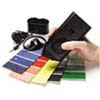
I found an interesting product that is now featured on my website and I am excited to introduce you to it.
Talking Color Identifier:
This is a Talking Color Identifier that identifies colors by naming the color and the intensity. For instance it will say 'dark blue' or 'light green' when the detector nozzle is held against whatever surface is being examined. Use this to help you dress in the morning if your vision problems prevent you from identifying colors.
Click on the picture to link to the product.
Click on the picture to link to the product.
Wednesday, September 23, 2009
The Power of Positive Thinking
I love this story and want my website to encourage this type of thinking,
ATTITUDE
Author unknown
There once was a woman who woke up one morning, looked in the mirror, and noticed she had only three hairs on her head. Well," she said, "I think I'll braid my hair today?" So she did and she had a wonderful day.
The next day she woke up, looked in the mirror and saw that she had only two hairs on her head. "H-M-M," she said, "I think I'll part my hair down the middle today?" So she did and she had a grand day.
The next day she woke up, looked in the mirror and noticed that she had only one hair on her head. "Well," she said,"today I'm going to wear my hair in a pony tail." So she did and she had a fun, fun day.
The next day she woke up, looked in the mirror and noticed that there wasn't a single hair on her head. "YEA!" she exclaimed, "I don't have to fix my hair today
Attitude is everything.
* Be kinder than necessary, for everyone you meet is fighting some kind of battle.
* Live simply,
* Love generously,
* Care deeply,
* Speak kindly
Life isn't about waiting for the storm to pass. It's about learning to dance in the rain.
ATTITUDE
Author unknown
There once was a woman who woke up one morning, looked in the mirror, and noticed she had only three hairs on her head. Well," she said, "I think I'll braid my hair today?" So she did and she had a wonderful day.
The next day she woke up, looked in the mirror and saw that she had only two hairs on her head. "H-M-M," she said, "I think I'll part my hair down the middle today?" So she did and she had a grand day.
The next day she woke up, looked in the mirror and noticed that she had only one hair on her head. "Well," she said,"today I'm going to wear my hair in a pony tail." So she did and she had a fun, fun day.
The next day she woke up, looked in the mirror and noticed that there wasn't a single hair on her head. "YEA!" she exclaimed, "I don't have to fix my hair today
Attitude is everything.
* Be kinder than necessary, for everyone you meet is fighting some kind of battle.
* Live simply,
* Love generously,
* Care deeply,
* Speak kindly
Life isn't about waiting for the storm to pass. It's about learning to dance in the rain.
Thursday, September 17, 2009
Solving the Problems Window Blinds Can Present

This is my favorite assistance device. Because I did not want to have window coverings open at night, I would leave blinds that I could not reach closed at all times. After putting in motorized window blinds, my house is bright and sunny which is so uplifting to the spirit. Now I can have blinds open during the day and closed, for privacy, at night. These window coverings open and close with a remote giving the control back to me. The cost was a consideration so I only use them in areas that I cannot reach.
Another possible solution, to those difficult to turn wands, is blinds that open and close by pulling a cord. These are much easier than trying to turn a wand and should not increase the cost of the blind. Just look for brands that have this option.
Click on the picture to link to the product.
Suzanne
Wednesday, September 16, 2009
Difficulty Physically Reading the Bible

This product is ideal for someone who get comfort from the Bible but, because of poor eye sight, has difficulty reading this great book. The Talking Bible speaks all books of the Bible - Old and New Testaments. You can move from book to book and chapter to chapter with the press of a button. This hand-held unit is perfect for the visually impaired, seniors, or anyone on-the-go who wants to be able to access the Bible.
Click on the picture to link to the product.
Suzanne
Tuesday, September 15, 2009
Outdoor Entrance/Exit Ramp
When putting a permanent ramp outdoors, keep in mind a visible ramp may advertise to the bad guys that a vulnerable person lives in the house. Put the ramp in the back of the house rather than the front. Better still, build it in the garage where it cannot be seen with the garage door closed.
For a permanent ramp, codes usually require a foot of ramp for every inch of drop. By this I mean if the platform is 15 inches from the ground you will need a 15 foot ramp. This will help prevent the ramp from being too steep and putting a wheelchair occupant at risk of falling out of their chair.
Suzanne
Sunday, September 13, 2009
Difficulty Getting Out of a Car

This is such a simple solution to a problem that affects so many people. It is can be difficult for people who are elderly or for those with limited leg strength to get out of a car. Cars are so low and it is hard to find a surface to use to push off. The Handy Bar is an easy solve to this problem. It inserts into the U-shaped striker plate of the vehicles door frame. Now, by using the armrest on one side and the Handy Bar on the other, passengers can use both arms to assist them in standing.
Click on the picture to link to the product.
Suzanne
Click on the picture to link to the product.
Suzanne
Saturday, September 12, 2009
Creative Problem Solving: Getting a Heavy Object From One Surface to Another
I am presenting this problem to demonstrate that there may be alternative paths to the same end. You just need to be creative in your problem solving. I needed to take a ham out of the freezer to let it begin thawing for Easter dinner. My daughter would be visiting later that day and she could put the ham in the refrigerator. I was able to get it out of the freezer and plop it onto the counter but, unfortunately, I forgot to ask my daughter to put it in the refrigerator. Now I had a real dilemma.
Problem: The frozen ham should not sit out on the counter for any length of time and the ham was too heavy for me to lift to a refrigerator shelf.
My solution: To solve the problem, I created a transfer board out of a cookie sheet. I put one end of the board on my lap (I am in a wheelchair hence, the lap.) and one end on the shelf. All I needed to do was slide the ham up the cookie sheet to the shelf.
Voila! Problem solved. Sometimes we just have to go about things in a different way to accomplish them.
Suzanne
Friday, September 11, 2009
Meals or Food in General
I find that the average person does not understand how difficult and tiring food preparation can be. This should be a consideration for all physically challenged people - be it from a medical condition or just normal aging.
Considerations:
- Glass can be a potential hazard if you consider the possibility of breakage. I use only non-breakable containers to freeze in, microwave in and eat from. Small containers can hold one serving size and give you sides to help scoop the food onto an eating utensil.
- Think ready to grab, heat (if necessary) and eat. If I have someone fix a large quantity of something, I have it stored in the freezer in individual serving containers. This way I can take my dinner out of the freezer, microwave it and eat from the same container.
- Try to take food preparation out, as much as possible, to make eating as simple as possible. Have someone wedge oranges and slice tomatoes. In fact, cut-up and slice as much as possible to prevent the need for someone with limited dexterity from having to use a sharp knife.
- Cook a pork or beef roast and cut it up. Then, freeze it in individual serving bags. This way you can take a bag out of the freezer, thaw it and then heat it. I use snack bags to place an individual meat serving in. These do not have to close they are just meant to allow me to take out a serving at a time. I place all the bags in a large freezer bag which I close.
- I freeze bread, bagels and English muffins to keep them fresh and take out one serving at a time. Make sure English muffins and bagels are sliced.
- I have difficulty closing bags that require you to line-up two tracks and press them together. My finger tips do not have good sensation and this process is frustrating to me. I have everything transferred to bags that close like a zipper. This would include any bags with “tie” closures. .
- Onions and green peppers freeze well. Have them chopped and frozen. In the chopped state, you can then remove the quantity you need.
- Another trick I use is microwave plates with covers. I found these in the grocery store. When there is a meal with multiple foods, make-up a plate with a serving of each item and freeze it. When ready to eat, just take the dish out of the freezer to thaw, remove items to be eaten cold and microwave. This would be a way for a family member to assist an elder parent. Just save a serving of each dish from a meal created for members of your household. (Make sure you use plates and covers that can be frozen and microwaved.)
Suzanne
Wednesday, September 9, 2009
Tips To Help Cope With Only One Useful Hand
I never thought of myself as single-handed but, on consideration, I guess I am. I physically have both hands but my right hand, the dominant hand, is very limited in mobility. I have multiple sclerosis with weakness and limitations on my right side. I eat and do things with my left hand with only minor, awkward assistance from my right hand.
EXAMPLES OF COMPENSATING FOR ONLY ONE HAND:
- Carrying things - First, I know I will have difficulty carrying things. I do not have the second hand to help me grasp things well. With this in mind, I come prepared - a bag for loose papers, a carrier with handles or I just let someone else do the carrying. For example, junk mail significantly increases the number of papers I receive. I use a canvas bag with handles to assist me. The mailbox flag is raised and I put one handle of the bag over the flag. This step holds the bag open so I can place mail in it to carry back to the house. This little trick helps prevent my mail from being strewn all over the lawn.
- Prevent lifting in the kitchen - To prevent lifting, use a counter-top microwave. I keep a pie or cake pan handy and just slip things onto the pan when I take them out of the microwave. Make sure you keep items level in the transfer process.
- Stabilize items on which you are working - There are products to help you hold objects to prevent them from slipping when manipulated. Website Link to the product:
http://empoweredlivingtoday.com/index.php?option=com_product&task=product&id=330&Itemid=396 4.00
- Make sure the weight of what you are lifting is suitable for only one hand. - Cook items in lightweight, serving size dishes. This make them easier to handle with one hand.
Since I need to use my left hand to eat, watching me eat is not a pretty picture. I find I have more luck getting the food to my mouth if I do not have to make that turn after scooping the food on a utensil. I use a spoon that bends back on itself. You will find these utensils by clicking on the following link:
http://empoweredlivingtoday.com/index.php?option=com_product&task=product&id=276&Itemid=340
Suzanne
Tuesday, September 8, 2009
The Benefits of a Counter-Top Microwave
Many homes have a build-in microwave over the oven. This can be a real hazard for someone with limited strength in his or her arms. This is just inviting a spill of hot substance on the user. Even though a counter-top microwave may be duplicating this appliance, it may be a lot safer. I use a pie or cake pan to protect the counters from heat and slide the hot container onto the pan. No lifting. Make sure you keep the container level during the slide.
Suzanne
Subscribe to:
Posts (Atom)